
Ajit Mishra, vice president, Research, Religare Broking, answers your queries.

The valuation of CIL dropped by Rs 20,875 cr to Rs 2,27,926 cr
ICICI Bank, HUL, HDFC Bank, M&M, Ultra Cement, IndusInd Bank and Tech Mahindra were among the losers in the Sensex pack. NSE Nifty slipped 13.95 points to 17,355.30.

Among the Sensex firms, Power Grid, ITC, JSW Steel, ICICI Bank, Tech Mahindra, Infosys, IndusInd Bank and Mahindra & Mahindra were the major laggards. Sun Pharma, Reliance Industries, HCL Tech, Hindustan Unilever, Bajaj Finance and Maruti were among the gainers.

Larsen & Toubro was the biggest gainer in the Sensex pack, rising 2.35 per cent, followed by Titan, Tata Consultancy Services, Maruti, Mahindra & Mahindra, Infosys, ICICI Bank and Asian Paints. In contrast, Power Grid, Nestle, NTPC, HCL Technologies and Bajaj Finance were among the laggards.

The market valuation of top seven Sensex companies fell by Rs 24,783.44 crore last week in an overall weak stock market.


Though most experts remain bullish on the banking space, they suggest investors buy only those banks whose NPAs are at a manageable level of 3% to 4% and there is credit growth or earnings visibility.

Dalal Street investors became richer by more than Rs 16.36 lakh crore this year as the equity market scaled new highs despite persistent geopolitical uncertainties and inflation worries. Analysts attributed better macroeconomic fundamentals, the confidence of retail investors and foreign investors investing again in the domestic equities towards the latter half of 2022 as the key factors that led to the outperformance of the Indian market in comparison to many other stock markets worldwide. During the initial part of the year, markets were jolted by the Russia-Ukraine war.
Firstsource raised $275 million (around Rs 1,265 crore) through foreign currency convertible bonds in 2007 to fund the acquisition of MedAssist.

Among the Sensex firms, NTPC climbed over 3 per cent emerging as the biggest gainer. Tata Motors, Sun Pharma, Tata Steel, State Bank of India, UltraTech Cement, JSW Steel, Bajaj Finance, Reliance, ICICI Bank and IndusInd Bank were the other major gainers. Power Grid, HCL Technologies, Tech Mahindra, Tata Consultancy Services, Infosys and Titan were among the laggards.

Kochhar is required to assist the investigating officer of the case in taking the probe forward and her statement will be recorded under the Prevention of Money Laundering Act (PMLA).
It's been bright times for banking sector stocks, ever since the passage of the Securitisation Act in November 2002.

Equity benchmark indices Sensex and Nifty hit their fresh record levels on Thursday after lower inflation numbers raised hopes of an interest rate cut by the RBI. Besides, heavy buying in capital goods, consumer durable and industrial stocks also helped the indices, traders said. Retail inflation continued its downward slide to reach a one-year low of 4.75 per cent in May due to a marginal decline of prices in the food basket and remained within the Reserve Bank's comfort zone of below 6 per cent, according to government data released on Wednesday.
Axis Bank's acquisition of Citibank's consumer finance business for Rs 12,325 crore - the second biggest deal in the Indian banking sector - is seen as a good deal at a good price. The acquisition enables Axis Bank to close the gap with competition in some key segments such as credit cards. At the same time, there are some key issues that are crucial for the deal's success, apart from the fact that it will take some time for Axis to reap the full harvest of its investment.

Among the 30 Sensex companies, Kotak Mahindra Bank, Asian Paints, Reliance Industries, ITC, Sun Pharma, ICICI Bank, Axis Bank and JSW Steel were the major laggards. Larsen & Toubro, Tata Motors, Maruti, NTPC, Mahindra & Mahindra and UltraTech Cement were among the gainers.

The action comes days after the CBI registered an FIR in the country's biggest alleged bank loan fraud case till date.

UltraTech Cement was the top gainer in the Sensex pack, rising 3.06 per cent, followed by IndusInd Bank, ICICI Bank, HDFC Bank, Titan, Axis Bank, SBI and Reliance Industries. NSE Nifty advanced 78.35 pointsto close at 14,814.75.
The commercial banks have begun issuing passbooks and account statements to the customers every month without charging any fees, following the diktat from the Reserve Bank of India.

Benchmark equity indices Sensex and Nifty slumped over 1 per cent on Friday, tracking a weak trend in global markets and fresh foreign fund outflows. Falling for the third day running, the 30-share BSE Sensex tumbled 1,017.23 points or 1.24 per cent to settle at 81,183.93.
ICICI Bank was the top gainer in the Sensex pack, rising over 3 per cent, followed by ITC, SBI, HCL Tech, Axis Bank, Bajaj Finserv and Tech Mahindra. NSE Nifty advanced 32 points to 15,856.05.
With the merger between HDFC Bank and HDFC Ltd complete, analysts said the next key monitorable for the Street would be successful resolution of merger-related hiccups, including employee-related churn and roll out of complete banking services across branches. At the bourses, they expect the stock to perform in-line with the benchmark indices in the near-term. "There's usually an initial period of consolidation after a merger as the entities work towards integration.

The ED, early this year, also attached assets worth Rs 78 crore "in possession of" Chanda Kochhar, Deepak Kochhar and the companies owned and controlled by him.
Disappointing quarterly earnings numbers and revenue forecast from IT services company Wipro also weighed on investor sentiments. The 30-share BSE Sensex fell 247.78 points or 0.38 per cent to settle at 65,629.24 points. During the day, it plunged 533.52 points or 0.80 per cent to 65,343.50 points.
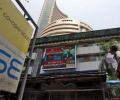
The BSE benchmark Sensex climbed 326.84 points on Monday, tracking gains in global equity markets and buying in index majors ICICI Bank and Hindustan Unilever. The 30-share BSE index gained 326.84 points or 0.62 per cent to settle at 53,234.77. During the day, it jumped 394.06 points or 0.74 per cent to 53,301.99. The NSE Nifty went higher by 83.30 points or 0.53 per cent to close at 15,835.35.

There has been a sharp recovery in the headline corporate earnings in the April-June 2023 quarter (Q1FY24), after a dismal showing by early bird companies. The combined net profit of the 983 listed companies that have declared their quarterly results, so far, was up 64.7 per cent year-on-year to record a high of Rs 2.68 trillion in the first quarter, but growth in earnings remained lopsided because most of the incremental gains came from a handful of companies. Moreover, the quarterly numbers showed a continued slowdown in revenue growth.

The 'bad bank' -- which will help banks clear their balance sheets by transferring the NPAs to special purpose vehicles -- has been one of the most debated ideas for stressed asset resolution.

Avista helped some companies restructure their debt in such a way that overseas investors had to take a steep haircut
Equity benchmark index Sensex on Wednesday crashed over 900 points to sink below the 73,000 level due to widespread selling pressure amid a sharp fall in smallcap and midcap indices. Besides, deep losses in utility, energy and metal stocks and recent selling by foreign investors added to the gloom, analysts said. Benchmark indices started the session on a positive note, but the selling intensified during afternoon trade, with all sectoral indices ending in the red.

From the Sensex basket, Kotak Mahindra Bank, HCL Technologies, ICICI Bank, Infosys, Tata Consultancy Services, Wipro, Tech Mahindra and Larsen & Toubro were the major laggards. Mahindra & Mahindra, Nestle, Tata Motors and IndusInd Bank were among the gainers.
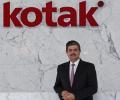
Ahead of the end of his term as the Kotak Mahindra Bank's chief executive and managing director, Uday Kotak has said he will be a "non-executive board governance member and a strategic shareholder" going ahead. In the private sector lender's annual report, the last such message from him as the MD and CEO before he relinquishes the position at the end of 2023, Kotak reminisced about the institution's journey, pointing out that Rs 10,000 invested in 1985 is worth over Rs 300 crore today. "Going forward, I see my role as a non-executive board governance member and a strategic shareholder with a long term perspective of nurturing a world class institution," Kotak said in the annual report.
The average fall in 15 most-invested stocks by equity MFs was 5.7 per cent. Chandan Kishore Kant reports
Among the Sensex firms, Bharti Airtel, NTPC, Tech Mahindra, Mahindra & Mahindra, Tata Steel, UltraTech Cement, Titan, Axis Bank, JSW Steel and Larsen & Toubro were the major gainers. IndusInd Bank, Kotak Mahindra Bank, HDFC Bank and State Bank of India were the laggards.
From the Sensex pack, Infosys, Hindustan Unilever, Reliance Industries, ICICI Bank, Larsen & Toubro, Asian Paints, Nestle, Axis Bank, Wipro and Kotak Mahindra Bank were the major gainers. JSW Steel, State Bank of India, Tata Steel, Bajaj Finserv, UltraTech Cement, IndusInd Bank, Tata Motors and Bajaj Finance were the major laggards.

There was no smooth surge in middle class prosperity for foreign businesses to tap into because of the Indian economy was mismanaged, argues Debashis Basu.

Tata Motors was the biggest gainer in the Sensex pack, rallying 2.94 per cent. It was followed by Vedanta, Bajaj Finance, Sun Pharma, ONGC, ICICI Bank, Bajaj Auto, Tata Steel, RIL, HDFC duo, L&T and SBI, rising up to 2.78 per cent.

If nominees pass away, distribution is governed by succession laws of insured's religion.

Unlike in the past, when old private banks compromised upon underwriting standards to take on the bulk, they've now realised that scaling up at the cost of quality isn't worth the while. These banks have also readjusted growth targets when required, and rebalanced books to preserve capital and asset quality.
HDFC Bank's latest shareholding data showed that the room for foreign investment has fallen just 5 basis points short of the threshold set by Morgan Stanley Capital International (MSCI) to fully include the stock in its indices. Currently, the index provider has applied an adjustment factor of 0.5 since the foreign room is less than 25 per cent. Removal of the adjustment factor will result in inflows of a massive $4.8 billion (Rs 40,000 crore) into HDFC Bank, according to Brian Freitas, a New Zealand-based analyst with Periscope Analytics.
While CIL, HDFC Bank, SBI, ICICI Bank and HDFC saw rise in their market cap, TCS, RIL, ONGC, ITC and Infosys witnessed fall in their valuations for the week ended April 25.
